How to Program Social Media Posts and Build an Automated Content System
Program social media posts is something most teams think they are doing, but in reality, they are still posting day by day.
You sit down to post, realize nothing is ready, and rush something out just to stay active. A few days later, you skip posting altogether. Then you try to catch up, and everything feels messy again.
This cycle is common, especially when you manage multiple platforms or campaigns. It is not a lack of ideas. It is the lack of a system.
When you program social media posts properly, content is prepared in advance, scheduled with structure, and runs without relying on daily effort.
In this guide, you will learn how to set that up step by step and build a workflow that keeps your content consistent without the constant scramble.
Table of contents:
-
How to Program Social Media Posts and Build an Automated Content System
-
What Does It Mean to Program Social Media Posts?
-
The Benefits of a Programmed Content Strategy
-
How to Program Social Media Posts: A Step-by-Step Workflow
-
Top Tools to Program Your Social Media Content
-
Conclusion
-
FAQs
What Does It Mean to Program Social Media Posts?
To program social media posts means setting up your content in advance so it runs based on a system, not daily decisions.
It goes beyond simply scheduling a post for a specific time. Programming involves defining what to post, when to post, and how content flows across platforms.
In a programmed workflow:
-
content is created in batches
-
posts are organized in a calendar
-
publishing follows a consistent pattern
-
execution does not depend on being online at the moment
For example, instead of logging in every day to decide what to post, you might prepare a full week of content in one session, assign each post to a time slot, and let it publish automatically.
The key difference is control. You are not reacting to your schedule. Your content runs according to a structure you have already defined.
The Benefits of a Programmed Content Strategy
Adopting a strategy to program social media posts is about more than just checking a task off your to-do list. It represents a fundamental shift from being reactive to being proactive. In a digital landscape where the average user switches between seven different social platforms per month, a programmed approach ensures your brand remains a steady, professional presence.
Here are the core strategic benefits of moving toward a programmed content model.
Omnichannel Consistency
One of the greatest challenges for modern marketers is maintaining a unified brand voice across multiple platforms. When you program social media posts in advance, you can see how your messaging aligns across Facebook, Instagram, LinkedIn, and TikTok simultaneously. This bird’s eye view prevents "brand fragmentation," where a follower might see a completely different tone or aesthetic on one platform versus another. By programming your content, you ensure that every post, regardless of the network, reinforces a single, cohesive brand identity.
Data-Backed Precision
Posting when you happen to be at your desk is rarely the most effective strategy. A programmed content strategy allows you to use historical data to identify "peak engagement windows." Instead of guessing, you can program your posts to go live exactly when your specific audience is most likely to be scrolling, liking, and sharing. This precision ensures that your high-value content reaches the maximum number of eyes, significantly improving your organic reach and return on investment.
Resource Optimization
Manual posting is a notorious time-sink. Interrupting your workflow every few hours to draft a caption, find an image, and hit "publish" shatters your productivity. By batching your content creation and programming it all at once, you optimize your most valuable resource: your time. This "work smarter, not harder" approach allows a small marketing team, or even a solo entrepreneur, to maintain a posting volume and quality that would typically require a full-scale agency.
Strategic White Space
When your daily posting is automated, you create "strategic white space" in your calendar. This is the mental and chronological room needed to focus on high-level growth, such as community management, real-time engagement, and long-term campaign planning. Instead of rushing to "just get something posted," you can spend your time replying to comments, joining relevant industry conversations, and building the authentic human connections that truly drive social media success in 2026.
How to Program Social Media Posts: A Step-by-Step Workflow
Programming social media posts is not a single step. It is a workflow that connects how you think about content, how you produce it, and how it gets published.
Most teams try to jump straight into scheduling tools. That usually fails because there is no structure behind it. The tool becomes a place to store posts, not a system that runs content.
A proper workflow starts before scheduling and continues after publishing.
Define your content structure
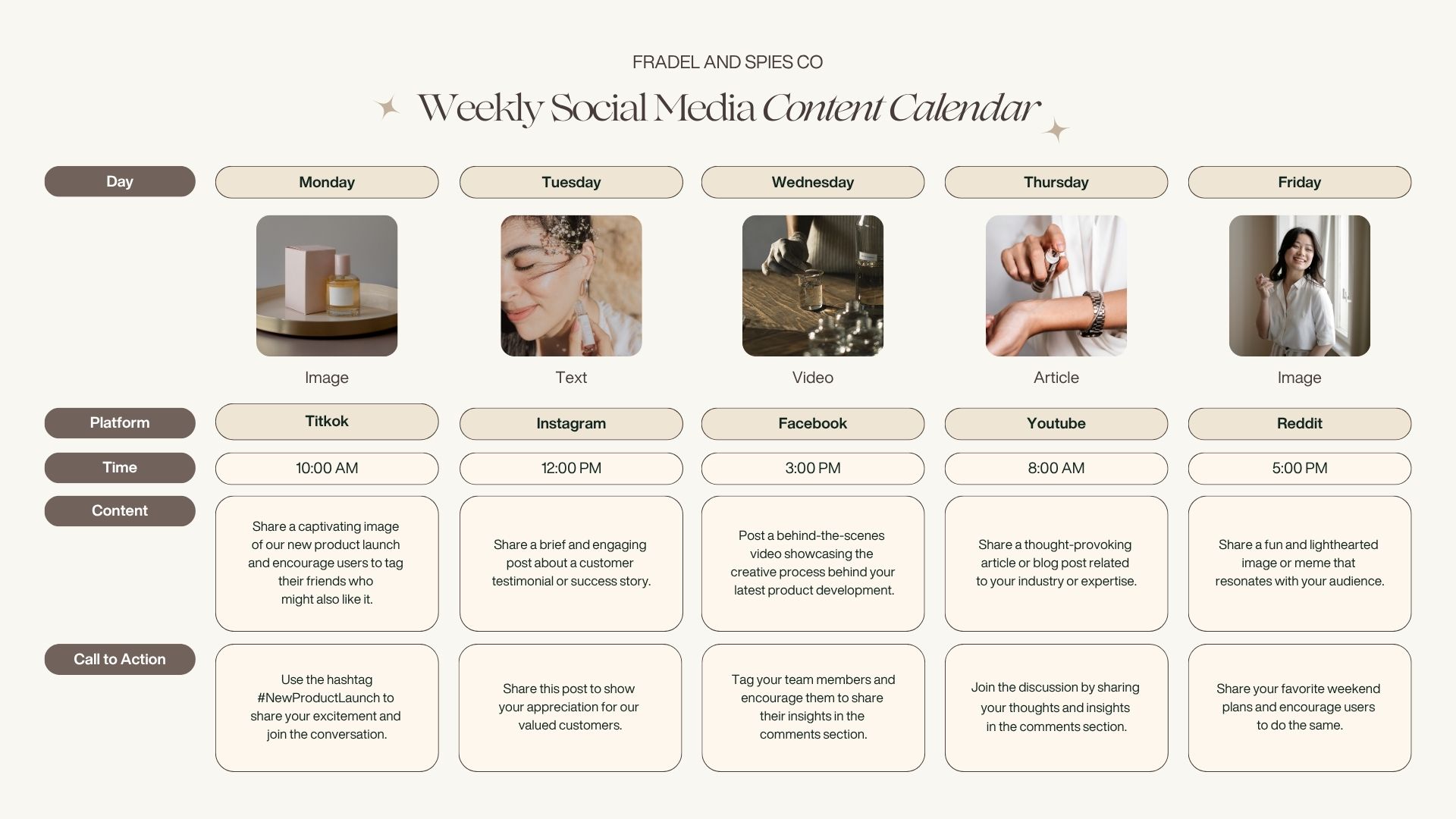
Before you program anything, you need to decide what your content actually looks like on a recurring basis.
This is not just about content pillars. It is about defining repeatable patterns.
For example, instead of saying “we post tips,” a structured approach looks like:
-
one short-form educational post every Monday
-
one engagement-driven post mid-week
-
one conversion-focused post at the end of the week
You are defining how content behaves over time, not just what it is about.
This matters because programming requires predictability. If every post is different, you cannot build a system around it.
At this stage, strong teams usually:
-
limit content types to a few repeatable formats
-
assign each format a role in the funnel
-
keep structure simple enough to execute consistently
If your structure is too complex, it will break. If it is too loose, it will not scale.
Prepare content in batches
Once your structure is clear, the next shift is how you create content.
Most people create content daily. That is one of the biggest bottlenecks in social media workflows.
Batching changes that.
Instead of creating one post at a time, you:
-
plan multiple posts in one session
-
produce content in focused blocks
-
prepare assets and captions together
For example, a typical batch session might include:
-
writing captions for 5 to 10 posts
-
preparing visuals or videos
-
aligning content with your weekly structure
This approach reduces context switching and improves quality.
It also makes programming possible. You cannot automate what does not exist yet.
Set posting rules and schedule patterns
This is where programming starts to take shape.
Instead of picking a random time for each post, you define rules.
These rules might include:
-
posting on specific days
-
assigning time slots for each content type
-
aligning posts with audience activity
For example:
-
educational content goes live in the morning
-
engagement content goes live in the afternoon
-
conversion content goes live closer to peak activity
You are not optimizing every post individually. You are creating a system that performs consistently.
Over time, these patterns become easier to manage and easier to improve.
Without this step, scheduling becomes manual again, just moved into a tool.
Automate publishing across platforms
Once your content is structured and prepared, you can move into automation.
This is where most teams either simplify their workflow or make it more complicated than necessary.
A tool like Octopost helps connect everything into one system.
Instead of treating each platform separately, you can:
-
manage Facebook, Instagram, LinkedIn, and TikTok in one place
-
adapt one content idea into multiple formats
-
schedule posts across platforms in a single workflow
In practice, the process looks like this:
-
Upload your batch content into the platform
-
Assign each post to the relevant channels
-
Customize captions or formats per platform
-
place each post into your predefined schedule
-
confirm and schedule everything in advance
Once this is done, your content runs automatically.
The key advantage is not just automation. It is coordination.
Your posts go live in sync with your campaigns, your messaging stays aligned, and your workflow becomes predictable.
Instead of managing posts, you are managing a system that outputs content.
Monitor and optimize performance
The final step is what turns programming into a long-term advantage.
Without feedback, even a well-structured system becomes static.
Once your posts are live, you need to look at performance with context, not in isolation.
That means paying attention to patterns:
-
which content formats consistently perform better
-
which time slots generate stronger engagement
-
which platforms respond differently to the same idea
Because your content follows a structure, these patterns become easier to identify.
Instead of reacting to individual posts, you can refine the system itself.
For example:
-
shift time slots based on engagement trends
-
adjust the mix of content types
-
double down on formats that perform consistently
This creates a feedback loop:
you program content → content runs → you learn from results → you improve the system
Over time, your content becomes more predictable, more efficient, and easier to scale.
Top Tools to Program Your Social Media Content
Once you move from posting to programming, the tool you use starts to matter more.
At a basic level, most tools can schedule posts. But programming content requires more than that. You need structure, visibility, and the ability to manage multiple platforms without breaking your workflow.
Here is how the main categories of tools compare in practice.
Native Platform Tools
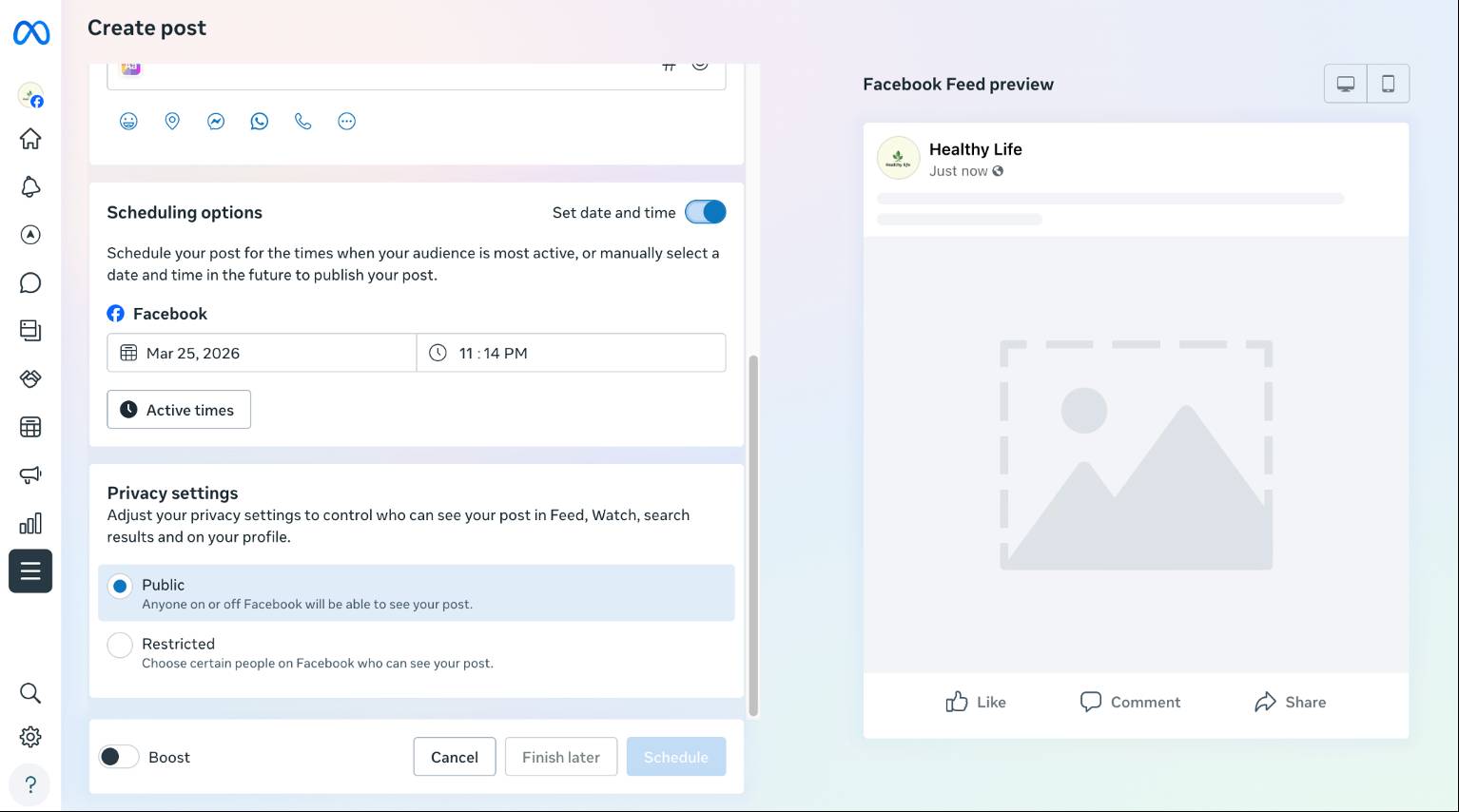
Native tools like Meta Business Suite (for Facebook and Instagram) and LinkedIn’s built-in scheduler are usually the starting point.
They are free, easy to access, and work directly inside each platform.
For simple needs, they get the job done:
-
schedule posts in advance
-
choose a date and time
-
publish automatically
However, their limitations show up quickly once you try to scale.
-
each platform is managed separately
-
there is no unified calendar across channels
-
planning campaigns across platforms becomes manual
-
collaboration and workflows are limited
In practice, native tools are useful when:
-
you manage one platform only
-
your posting frequency is low
-
you do not need structured planning
But as soon as you handle multiple channels or campaigns, they become fragmented.
Professional Automation Suites
Professional tool like Octopost are designed to go beyond basic scheduling.
They introduce features such as:
-
multi-platform publishing
-
content calendars
-
basic analytics
-
team collaboration
This makes them more suitable for growing teams.
You can manage multiple accounts, plan content ahead, and reduce manual posting.
However, many of these tools still treat scheduling as the core function.
That creates a common limitation:
-
content is scheduled, but not fully structured
-
workflows feel like a collection of features rather than a system
-
managing campaigns across platforms still requires manual coordination
They improve efficiency, but they do not fully solve the problem of building a repeatable content system.
The Octopost Advantage
Octopost approaches social media differently. Instead of focusing only on scheduling, it is designed to support the full workflow of programming content.
The difference becomes clear when you look at how everything connects.
With Octopost, you are not just scheduling posts. You are managing your entire content system in one place.
At the core is a centralized content calendar that acts as your control center.
-
you can see all posts across platforms in one view
-
organize content by campaign, timeline, or theme
-
adjust schedules without breaking your structure
This solves one of the biggest issues teams face: fragmentation.
Instead of managing Facebook, Instagram, LinkedIn, and TikTok separately, you manage one system that distributes content across all of them.
Multi-platform workflow, not isolated posting
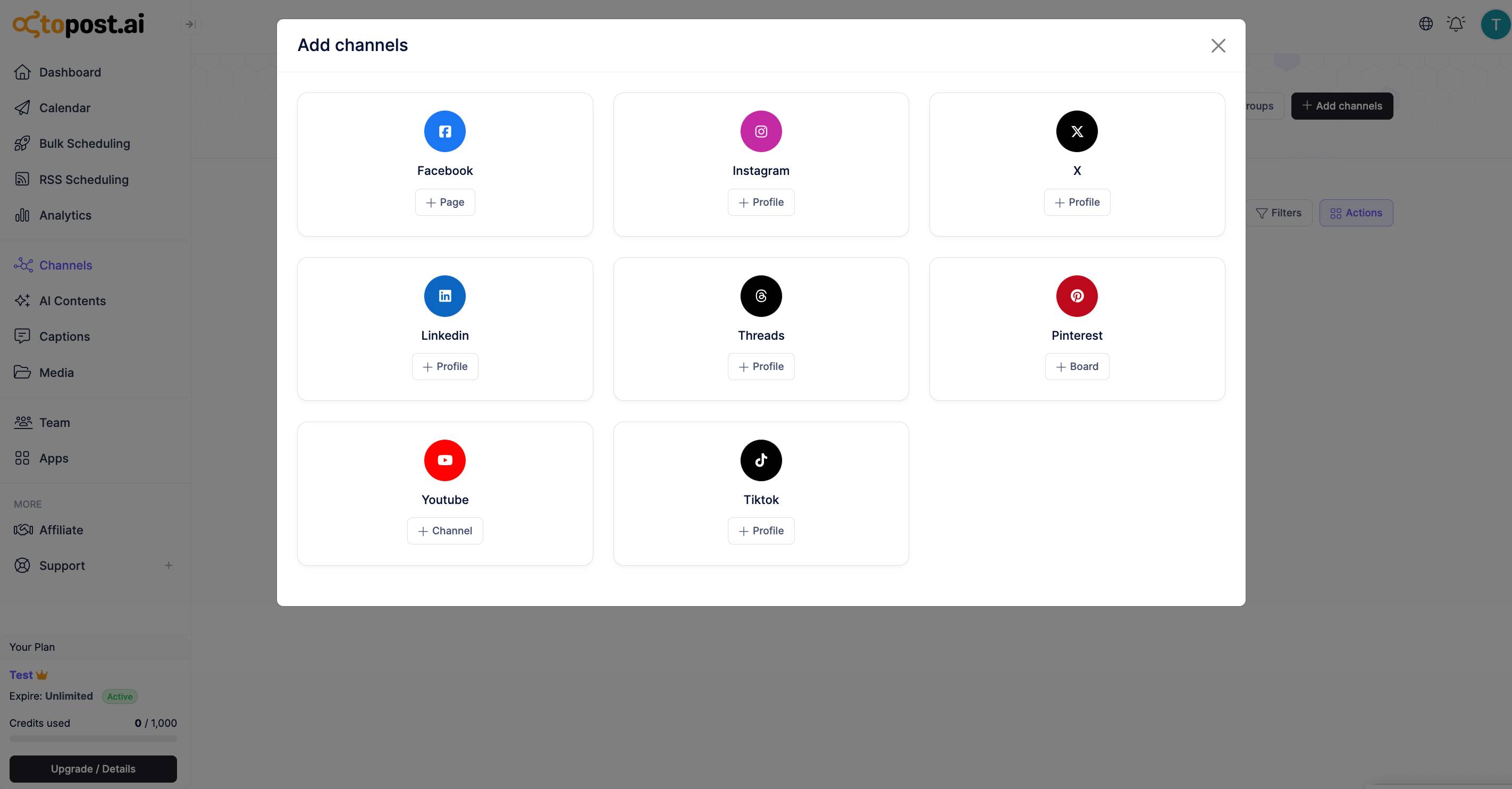
One of the strongest advantages is how Octopost handles multi-platform publishing.
You can take a single content idea and adapt it across channels without starting from scratch.
-
create once
-
customize per platform
-
publish across multiple channels from one workflow
This keeps messaging aligned and reduces duplication of work.
Batch scheduling at scale
Programming content requires batching.
With Octopost, you can:
-
upload multiple posts at once
-
assign them to your predefined schedule
-
plan content for weeks or months ahead
This removes the need for daily posting and turns your workflow into a predictable system.
Automation that fits your structure
Instead of scheduling each post manually, Octopost works with the structure you have already defined.
-
assign posts to time slots
-
align publishing with campaigns
-
ensure consistency without constant adjustments
This is what makes it feel like programming, not just scheduling.
Integrated analytics for continuous improvement
Another key advantage is how performance data connects back to your content plan.
You are not just seeing metrics. You are seeing how your system performs.
-
compare formats across platforms
-
identify which patterns drive engagement
-
adjust your content structure based on results
Because analytics are built into the same workflow, improvements happen faster and with more clarity.
What this means in practice
With Octopost, the workflow becomes:
-
plan your content structure
-
batch create content
-
schedule everything in one system
-
publish automatically across platforms
-
track performance and refine
Instead of managing posts, you are managing a system that runs your content consistently.
For teams that want to move beyond manual posting and fragmented tools, this shift makes a significant difference. It reduces operational friction, improves consistency, and makes social media easier to scale.
Conclusion
Programming social media posts is not about adding more tools or complexity. It is about removing the daily friction that slows everything down.
When content depends on manual posting, consistency breaks, campaigns lose alignment, and results become unpredictable. A programmed system fixes that by shifting effort upfront. You plan once, execute consistently, and improve over time.
Once that system is in place, social media stops feeling reactive. It becomes something you can manage, measure, and scale with much more control.
FAQs
What does it mean to program social media posts?
It means setting up your content in advance so it follows a structured system. Instead of posting manually each day, your content is prepared, scheduled, and published automatically based on predefined rules.
Is programming social media posts different from scheduling?
Yes. Scheduling is setting a time for a post. Programming involves creating a full system, including content structure, posting patterns, and automation across platforms.
What tools can you use to program social media posts?
You can use native tools like Meta Business Suite for basic scheduling. For more advanced workflows, tools like Octopost help manage multi-platform content, automation, and performance tracking in one place.
How far in advance should you program social media content?
Most teams plan one to two weeks ahead. Larger campaigns are often programmed a month in advance to ensure consistency and alignment.
Can you program social media posts for free?
Yes, basic scheduling can be done with free tools. However, advanced features like multi-platform management, automation, and analytics usually require paid tools.